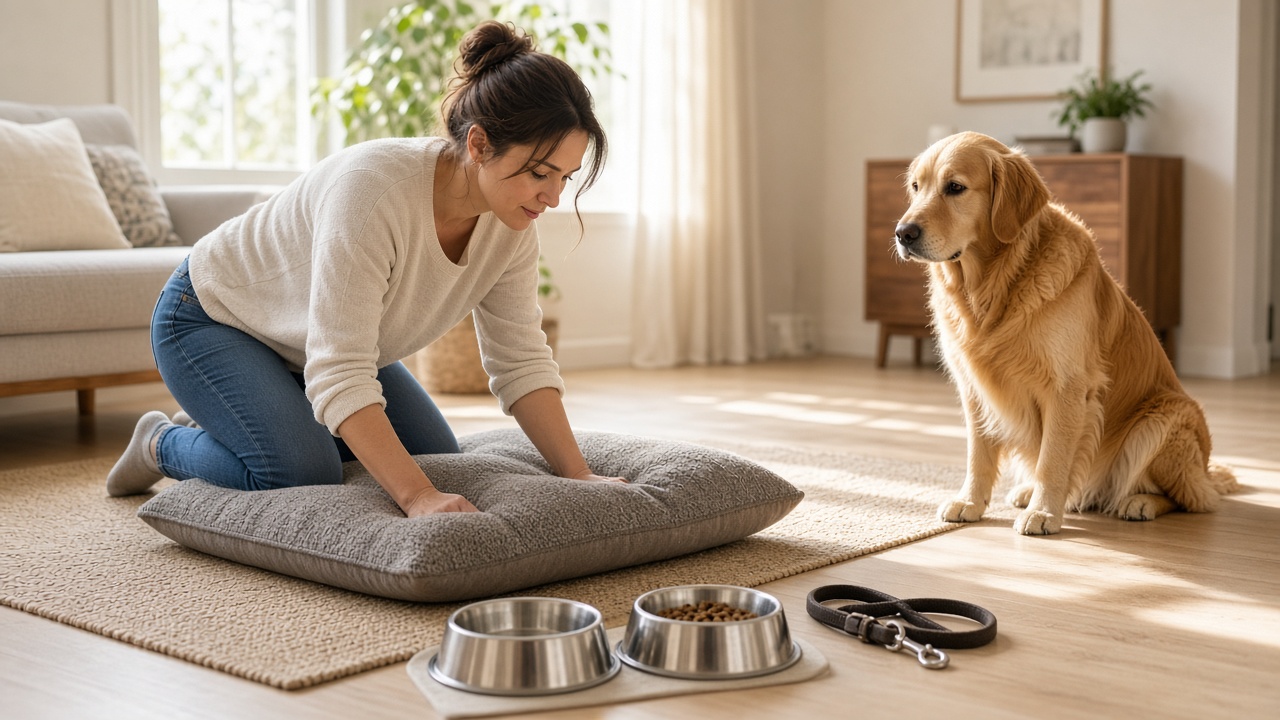
Bringing a dog home changes the shape of a day: meals, doors, walks, sleep, and the quiet hour when you leave for work. This guide is a practical checklist for that first stretch. It is not a substitute for a veterinarian. If something about eating, drinking, mobility, or mood worries you, call your clinic.
Preparing the home
Walk the house at dog height before the crate or bed arrives. Pick up medications, chocolate, xylitol gum, loose wires, and anything a curious mouth will test. Decide which rooms are open on day one. A smaller territory is easier to supervise than a full house with four unattended corners.
Set up one feeding spot, one water bowl that will not tip easily, a bed or crate in a low-traffic place, and a leash hook near the door you will actually use. Put cleaning supplies where you can reach them. If you have a yard, check the fence line for gaps and make sure gates latch.
Keep household cleaners, trash, and laundry off the floor. Many new owners are surprised by what a dog considers a toy. If you are not sure an item is safe, it does not belong in the open.
Feeding routine
Ask the person or shelter you got the dog from what food is currently in use, how much, and how often. Sudden food changes are a common reason for an upset stomach. If you plan to switch later, do it gradually and with guidance from your veterinarian, not all at once on night one.
Pick meal times you can keep on weekdays. Write them down. Measure food instead of guessing from the bag. Fresh water should be available, and the bowl should be washed often enough that film does not build up.
Treats count as food. If you are training a lot, shrink the bowl portion so you are not stacking extras on top of a full meal. Puppies and some adult dogs do better on a schedule than with free feeding. Your veterinarian can help you choose a plan for age and body condition.
Walking
A first week of walks is often shorter and quieter than people expect. The point is relief, a little sniffing, and a safe return, not a fitness record. Use a collar or harness that fits, a leash you can hold if the dog startles, and a route with a simple loop home.
San Antonio heat, wet roads, and summer pavement matter. If the sidewalk is too hot for your hand, it is too hot for paws. Carry water on warmer days. In storms or poor air quality, a backyard break may be the better choice for that hour.
Teach a consistent door routine: leash on, pause, then step out. That pause is easier to learn now than after the dog has practiced bolting. For more on frequency, read How Often Should You Walk Your Dog?
Basic training
Name, sit, come, leave it, and a settle-on-a-mat cue cover most new households. Keep sessions short. End while the dog is still willing. Use food or a toy the dog actually likes. If the dog shuts down, the session was too long or the room was too busy.
House training is a schedule, not a pep talk. Take the dog out after sleep, meals, play, and before you leave. Praise outside. Clean accidents with an enzymatic cleaner. Punishment after the fact teaches the dog to hide, not to wait.
Crate or pen time should be introduced with meals and rest, never as a mystery lockup. If you use a crate, size it so the dog can stand and turn without extra rooms to soil.
Sleep
Decide where the dog sleeps and keep that answer for at least a few weeks. Switching from crate to bed to another room every night makes settling harder. Puppies need more total sleep than adult dogs. A late-night last potty trip saves a 2 a.m. accident more often than a longer evening play session.
White noise or a dim hallway light can help a dog who startles at apartment sounds. If restlessness is new, sudden, or paired with other changes, ask your veterinarian rather than adding more late-night activity.
Safety
ID tags should have a current phone number. Ask your veterinarian about microchip records when you establish care. Keep a collar that cannot catch on crate wires. Store the leash where guests will not leave a door open “just for a second.”
Car rides need a harness, crate, or other restraint you can use every time. Open truck beds and loose back seats are a poor plan. At home, never leave a dog in a parked car in Texas heat.
Know the nearest emergency clinic address before you need it. Save the number next to your regular veterinarian. This guide does not tell you when a symptom is an emergency. When you are unsure, call the clinic.
Vet preparation
Book a wellness visit early, even if the dog “seems fine.” Bring any records you were given, the current food name, and a list of questions. Write down cough, itch, stool changes, or appetite notes from the first days. Clinics can do more with specifics than with “something feels off.”
Ask how to reach the office after hours. Ask what to do if you need to give a medication later. Do not start supplements or human medications because a friend suggested them.
Building a routine
Dogs relax when the day has a shape. A simple template works: morning relief and a short walk, breakfast, rest, midday break, afternoon activity, dinner, evening walk, last potty, sleep. You can move the blocks, but empty stretches with no plan tend to become chewing or barking.
Put feeding, walks, and crate time on a note on the fridge so anyone else in the house uses the same times. Consistency between people matters as much as consistency between days.
The routine you can keep on a Tuesday in July is more useful than an ambitious plan you abandon by week three.
Leaving the dog alone
Practice short absences before a full workday. Five minutes, then fifteen, then an errand. Leave after a potty break, with water, and with a safe chew if that helps your dog. Cameras can show you whether the dog settles or paces. They are information, not a conversation with the dog.
Some dogs need a slower build. If the dog destroys doors, howls for the entire absence, or injures itself, talk with your veterinarian or a qualified trainer. Do not use longer isolation as the only experiment.
When a dog walker or pet sitter can help
Help is useful when the gap in the day is longer than your dog can comfortably wait, when recovery from a procedure requires extra midday checks (as directed by your veterinarian), or when travel would otherwise leave food, water, and relief to chance.
A walker covers the mid-day loop. A sitter can also feed, refresh water, and keep a shy dog company in the house. Neither person replaces veterinary care. Share written instructions: feeding, gear, route notes, medications if your veterinarian has prescribed them, and how you want updates.
Ring Pet Central offers dog walking and in-home sitting in San Antonio. A request is reviewed before care is confirmed. If you are still setting up the house, send the routine you have, even if it is new. That is more helpful than a blank form.
Continue with Preparing Your Pet for Boarding if an overnight stay is on the calendar, or return to all guides.