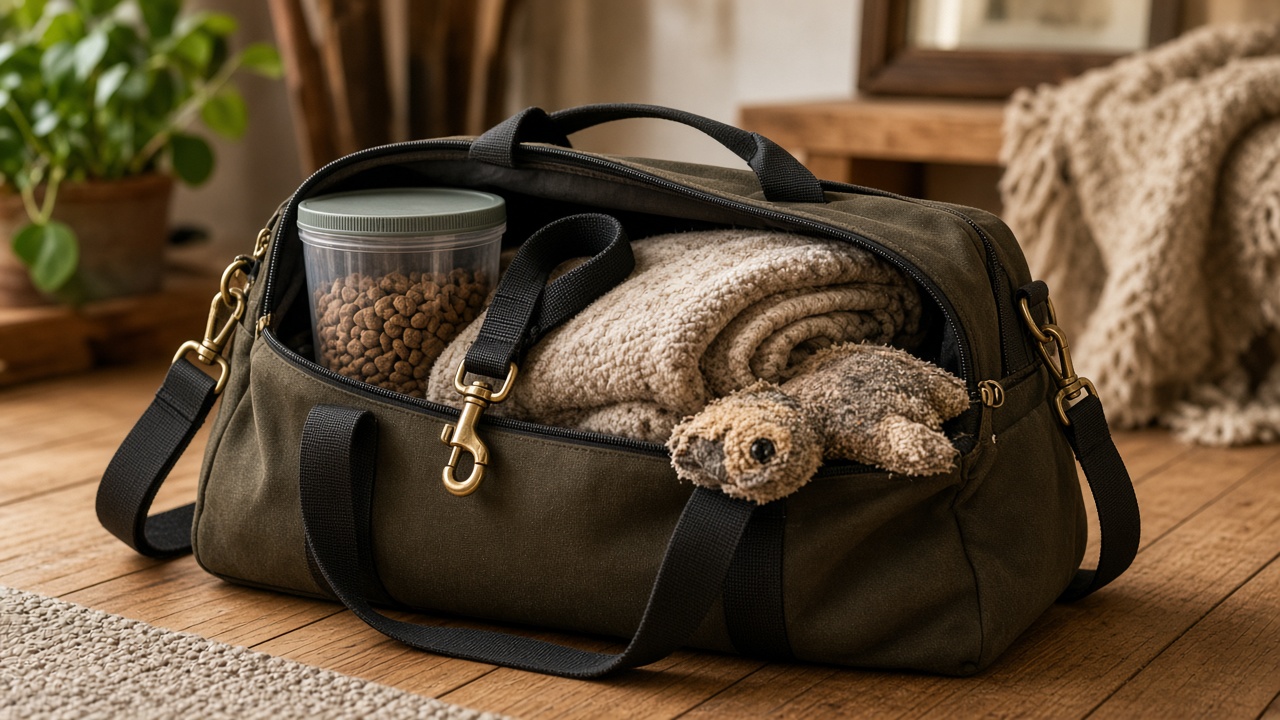
A boarding stay goes more smoothly when the caregiver already knows how your pet eats, rests, and reacts to new rooms. This checklist is for home-style boarding, where a suitable dog or cat stays in a caregiver's house. It is also useful if you are still deciding between sitting at home and an overnight stay. Boarding is subject to availability and suitability. This is not veterinary advice.
Choosing appropriate care
Start with the pet, not the calendar. Pets who panic in new buildings, who do not travel well, or who need a very specific home setup may do better with in-home sitting. Pets who become lonely in an empty house, or who cannot wait through a long work-and-travel stretch, may be a better match for a stay with a person home.
Read Pet Sitting vs. Boarding if you want a side-by-side. Then request the option that matches personality and trip length. A request is not a yes. Compatibility still has to be reviewed.
Food
Pack more food than the nights on the calendar. Delays happen. Keep it in the original bag or a clearly labeled container with the brand, flavor, and measuring amount. Write breakfast and dinner times, and whether food is mixed with water or a topper.
If the pet has a sensitive stomach, do not send a “special trip food” they have never eaten. Familiar food is the calmer choice. Include treats only if they are part of the usual day, and say how many.
Medications
Send medications in original packaging when you can, with the pet's name visible. Write the dose, the time, whether it is given with food, and what to do if a dose is refused. Caregivers follow owner-provided instructions. They are not veterinarians and should not invent a new protocol.
If a medication is new, ask your veterinarian how to handle a missed dose before you travel. Put that answer in the written notes. Include a backup supply if the stay could extend.
Routine
Write the day in order: wake-up, meals, litter or potty, walks, play, quiet hours, bedtime. Note crate habits, favorite rooms, and whether the pet eats better with company or alone. The closer the stay is to that script, the less the pet has to figure out.
Behavior information
Be specific. “Friendly” is less useful than “warms up after ten minutes” or “barks at delivery vans but settles with a closed curtain.” Mention resource guarding, door dashing, fear of stairs, or discomfort with children or other animals. Honesty here protects your pet and the household hosting them.
If your pet has ever bitten, snapped, or needed to be separated from other animals, say so in the request. Home-style boarding depends on compatibility. Withholding that history makes a stay less safe for everyone in the house.
Emergency contacts
Give a local person who can answer the phone while you travel, plus your own numbers. Include time zones if you will be in the air. Write who is allowed to make a decision if you cannot be reached, and how the caregiver should try you first.
Veterinarian details
Clinic name, address, phone, and your pet's name as it appears in their file. If there is a preferred emergency hospital, add that too. Some clinics need written permission on file for a caregiver to bring a pet in. Ask your veterinarian what they require before you leave.
Familiar belongings
A bed that already smells like home, a worn T-shirt, the usual leash, and one or two known toys travel better than a bag of brand-new items. Skip anything you would be upset to see chewed. Label the bag with your name and dates.
For cats, a familiar carrier, litter type, and a hide-style bed can matter more than extra toys. For dogs, bring the collar or harness used on daily walks so the gear feels the same.
Meet & Greet
A short introduction lets you see the home, lets the pet sniff the doorway, and lets you walk through feeding and sleep plans in person. Ask for one if your pet is cautious, if this is a first stay, or if you simply want to meet the caregiver. It is available. It is not automatic for every request.
Preparing for drop-off
Confirm the arrival window, parking, and who will be home. Walk or play earlier in the day if that is part of your usual rhythm, then keep the goodbye short. Long emotional farewells often stir the pet more than a calm handoff.
Do a last check of the bag: food, meds, written notes, emergency numbers, veterinarian card, leash, and belongings. Take a photo of the packed bag if you want a record of what you sent.
What information the caregiver needs
The first Request Care form only needs dates, pet type, and basic notes, including whether medication or special care is involved. Before a stay is confirmed, we collect feeding, routine, behavior, compatibility, medications, emergency contact, and veterinarian information separately.
Updates during the stay should be agreed in advance: a photo after dinner, a short text in the morning, or a quieter approach if you will have limited service. Home-style boarding details live on the Pet Boarding page, including starting prices and the reminder that not every pet is accepted for a stay.